Wrangling an RFP – 8 Steps to Reduce Total Wireless Costs
A wireless RFP (request for proposal) to negotiate a new carrier agreement is an extremely complex simple process.
Sound confusing? It is much like baseball. A fairly simple game (hit the ball, run the bases, score more runs than the other team, win) with many variable complexities: when to put in a lefty pitcher, what pitch to throw (curveball, slider, change-up), when to steal a base.
That is a lot like the RFP process. Except instead of scoring runs, your ultimate goal is to get the lowest price for the best fit of services to your organization. The complexity: when and how to do it, how to interface with the carriers, what way to get the best industry standards for competitive advantages?
[message type=”info”]RFP Defined: Documentation of detailed requirements by a customer in order to receive, negotiate and implement vendor offerings[/message]
The goal here is to give a quick primer for any business organization who is beginning a wireless RFP implementation. We hate longwinded introductions as much as you do so let’s get started:
STEP 1 – Determine organization wants and needs
This can sometimes be one of the trickiest parts of an RFP renegotiation process: you want everything at the cheapest price. Well, that’s just usually not reality and therefore you need to be discerning about your non-negotiables versus your wants.
This is a very customized and organization-specific decision, but here are some real world examples:
- Customer 1 didn’t care about individual liable discounts, but really wanted to get early termination fees (ETF) waived
- Customer 2 didn’t care about ETF fees, but wanted a much better discount and flat fee replacement equipment
- Customer 3 simply wanted free equipment and could live without a port-in credit

Each of these examples provides bargaining power and things that can be given up to align the real needs of the organization with the capabilities of the provider. Additionally, coverage often plays a key role in this decision as usually there is not one provider that can meet all the needs of every organization.
STEP 2 – Be reasonable about what to expect
We usually set the expectation that a well-done RFP will result in a 10-20% savings from what the organization is paying today. This is assuming the organization is already optimized and on competitive rate plans. If that is not the case, the savings are usually significantly greater.
We usually set the expectation that a well-done RFP will result in a 10-20% savings from what the organization is paying today. This is assuming the organization is already optimized and on competitive rate plans. If that is not the case, the savings are usually significantly greater.

Keep in mind some of this is difficult to quantify because there are many avoided costs in an RFP which actually never show up on a bill. For example, we have frequently negotiated a free or reduced cost for a text messaging plan. Because users did not have a text message plan before due to its expense, the organization can now add the feature free of charge and have the benefit of the productivity tool but not the cost. Here, the cost was avoided (getting a feature the organization is not paying for, therefore avoiding the cost in this case).
Also, check out our blog post for more on what businesses should pay for wireless.
STEP 3 – Ask for stuff!
You won’t get lower costs if you don’t ask for things. Ask for as much as you can, the carriers can only say “no” and will often say OK. The good ones will negotiate a clever term or a creative way to give you what you need and also be able to satisfy their finance team requirements. Often it can be all in the framing of the issue (this is where needs vs. wants really come in).
For example, learn everything you can about the competition, the industry and offerings to other customers. This is where we really make a difference.
- As a WEM firm, we see across all carriers and many customers, and while we cannot provide specific data on specific customers or carriers due to confidentiality agreements, we can guide and provide many industry suggestions on what offerings are out there to similar type customers.
- You can’t believe what a difference it makes just to have us sit at the table and keep the providers honest. Carriers know they can’t tell tales if we are in the room. So many times, I have heard a carrier state something, have the customer glance my way, I’ll shake my head, “not so much”, and it is a powerful way to get past a meaningless debate and into the real matter at hand.
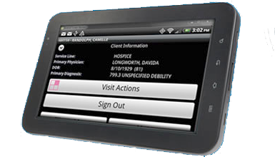
Recently, we attended a Home Health Care Conference and TMobile GAVE each conference participant an Android device (pictured below) PLUS a keyboard docking station. This was to the tune of about 250 devices. Carriers will give you stuff if they think they will get money back.
STEP 4 – Document what you ask for and what you ultimately receive
Get a comprehensive document that is generic to be sent to at least 3 carriers for responses. The document should have:
- General overview of your organization
- Questions regarding the carrier overview and performance standards
- Timeframe expectations
- Non-disclosure statements
And pertinent sections for specific needs:
- Voice & Data
- International
- Features (text messaging etc)
Document everything consistently to each carrier (that is, do not provide different information to different carriers; you want apples to apples comparison). A very simplified RFP version can be found in Microsoft Office.com templates.
Finally, document all the responses from the carriers in a standardized format. This will help you with the next step.
STEP 5 – Look at NET cost (it’s not all about the discount)
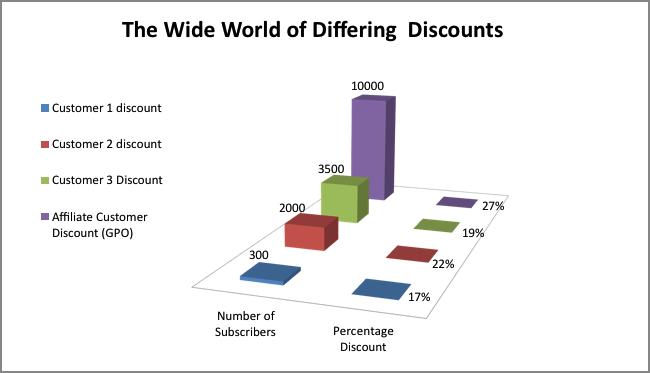
Discounts, as shown below can be deceiving and inconsistent.
This step is particularly interesting to write about because it seems so simple, it is often not stated, but, an RFP is not all about the discount. It is indeed about the net cost.
As you receive information from your carriers, make sure you get to bottom line dollars of what you will write a check for each month and then use this number to compare it to what you write a check for now. That is your only real accurate means of comparison with the carriers. This is not, unfortunately, how they present the data to you.
Consider the following:
Look at net cost of the plan and the discount (see next page). If you have a 25% discount, this is great, but if it is on a plan that gives you 500 minutes and is $15 per month more than the competing carrier, how does the competing carriers’ rate stack up? As you can see from the below graphic, the carrier with the worst discount is actually the lowest cost option.

STEP 6 – Know your numbers, then ASK for stuff again
If your corporate budget requires a 20% reduction in spend, make sure to let the carriers know your numbers and how far off they are. Frequently, with a good business case, they can go back to their pricing folks and get stuff if they know it will take “$X”.
We had a great relationship with a carrier working on an RFP and we simply said, listen, we need $X to get the job done. It was a significant number, but it was an accurate one and it worked. The carrier came through, got their contract executed and we got a great deal for the customer.
Consider 2 industry definitions:
CPGA (Cost per Gross Add)
What it costs the wireless carrier to add you as a customer recorded in per subscriber terms. Average CPGA across all carriers is $350-400: this is the cost to acquire a new subscriber.
- This number covers ALL costs (yes, including the subsidized price of the device!) which includes commissions paid to agents/employees, (we’ll say it again) phone subsidies and marketing costs.
- So this means that if you get a free device, on average, the carrier is down $350 (per subscriber) when you sign up with them and they need to earn this back to become profitable.
Mix this with your:
ARPU (Average Revenue Per User)
Measurement by the carriers to understand the value of their subscriber base and compare to other carriers as a metric.
- It is the measurement of the average dollars spent per month by each subscriber across their subscriber base.
- It is calculated by taking the total revenue (what we at Bill Police call “all in”. This number includes taxes, fees, assessments, etc and is the total amount the user pays, not just the access fees as are so often quoted to customers by carrier reps) and dividing it by the number of total users. For example, if carrier X has 100,000 subscribers and the revenue for these subscribers is $5,000,000, then the ARPU is $50.
- Determine your ARPU and use this against CPGA to help you bargain even further
STEP 7 – Read the agreement in full
This is so simple, yet so many organizations neglect reviewing the agreement and detail.
Simply put: read the ENTIRE agreement, line by line and be sure all that was agreed to during the negotiation is in the final agreement. There have been many times we have negotiated an item and it is mysteriously missing or changed in the final document.
STEP 8 – Implement
Again, simply said, not so simply executed: do what the agreement says.
In all of our contract negotiations, I can tell you that not in one case did all the items in the agreement show up properly on the bill. Expect that there will be mistakes, review the bill carefully (especially the first month after the agreement is in place) and request credits immediately from the carrier.